

Stains, dirt, dust
how to clean a mattress
If you haven't considered getting a new generation cotton waterproof mattress protector (not the 30-year-old plastic kind), you might find your mattress yellowed or dirty after just a few months. Let's understand how to maintain mattress hygiene and cleanliness, and how to deal with extraordinary cleaning for all kinds of stains and dirt that mar the mattress.
Pay attention to washing labels!
Among the best-selling accessories we offer on our website are mattress covers (outer mattress coverings). It often happens that the outer mattress cover fabric needs to be replaced, not because it's stained, dirty, or worn out, but because it becomes unusable after washing due to shrinkage, or because the cover's padding couldn't be wet washed but only dry cleaned (due to being padded with Memory foam, latex, or other foams), or because absolutely discouraged and avoidable additives or bleaches were used. Often, laundries themselves contact us, but once the damage is done, there's not much to do.
Miglior Materasso recommends:
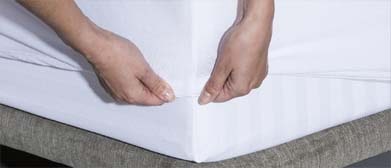
What if we told you that even a sheet can protect your mattress? The Respira fitted sheet is cool and waterproof, blocking liquids and sweat.
Migliormaterasso.it has useful information for you on mattresses and rest, follow us on Instagram and Facebook!
You might also be interested in:

Guide to reading fabric washing labels

We must consider that the most famous mattress factories, Ennerev Simmons Dorelan Tempur, etc., do not sell the fabrics of their mattresses, trying to encourage the purchase of a new mattress. Therefore, the fabric will have to be replaced with a commercial cover (forgive me the term more appropriate for an auto parts dealer!). If you are thinking of replacing the cover of your Latex, Memory, or spring mattress, take a look at the page for custom mattress fabrics.
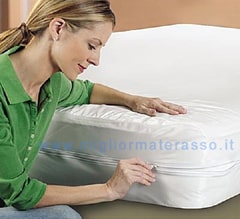
Strip the mattress: Remove bedding, duvets, and mattress cover. Heat kills dust mites in your bed, so it's a good idea to check the manufacturer's labels to understand the maximum heat you can use to set your washing machine and dryer.
sanitizing and cleaning the mattress
1. Vacuum the mattress
The number one ally in mattress cleaning, especially if the mattress cover cannot be removed. Do you remember wool mattresses folded in half on the bed base every morning? Maintenance and cleaning were different then, but more time was dedicated to it than today. The mattress was cleaned annually with the help of a mattress maker and beaten outdoors once a week. Today, specific mattress vacuums are used to simulate beating with a carpet beater (CAUTION: multi-purpose vacuums could transfer bacteria from the floor to your mattress, and not being specific, they could damage the fabric and padding of mattresses).
Even after washing the mattress cover, it's a good idea to vacuum, as even dead mites can cause allergies! How to vacuum the mattress? Start from the top of the mattress and work your way down in narrow, overlapping paths, then vacuum the sides of the mattress in the same way without flipping the mattress.
The Simmons Aspirac anti-mite vacuum cleaner not only vacuums dust and mites but also disinfects the mattress with a LED lamp.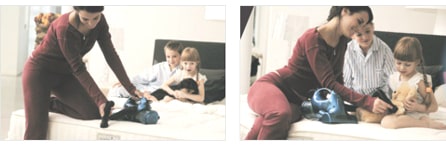
2. Deodorize the mattress: if this is the need, you might need to change the mattress cover, or the entire mattress. This procedure is recommended if the outer fabric is not removable, to perform a real mattress wash, because it is soaked with odors and humidity, but it can also be applied to the core of the mattress stripped of its fabric. Sprinkle thoroughly with baking soda and rub with a brush so that it penetrates the mattress fabric or the central core if you have been able to remove the cover. If you also want to scent the mattress, I recommend mixing baking soda with a few drops of essential oil. Lavender is known to aid sleep, but sandalwood has an excellent fragrance. The baking soda should rest for 10 minutes, and then see point 3.
3. Vacuum again: with the baking soda wash, you've helped the mattress eliminate moisture and other impurities. Vacuum a second time, removing the baking soda that will have attracted moisture and bad odors.
4. Removing stains from the mattress
blood, urine and other stains
The toughest stains: blood, urine, and what we'll just call "other bodily fluids." If you can act immediately, treat stains with cold water and a little dish soap or hydrogen peroxide (hot water sets these types of stains).
If you act quickly, blood stains can be easily removed with simple hydrogen peroxide.
Dried Blood Stains
It can certainly happen that you can't intervene immediately and are forced to treat a blood stain that has already dried. Here's how to proceed to remove dried blood stains:
Remove old blood stains from the mattress:
Dried blood stains on the mattress can be treated by making a paste with 1/4 cup of hydrogen peroxide mixed with 1 tablespoon of dish soap and table salt. Rub this paste onto the stain and let it sit until dry before scraping off the residue. Remove any remaining stain with a white cloth soaked in hydrogen peroxide, rotating the cloth towards the extent of the stain. Using a white cloth prevents dye transfer from the cloth to the mattress.
Dish soap is also useful for coffee stains, but not hydrogen peroxide.
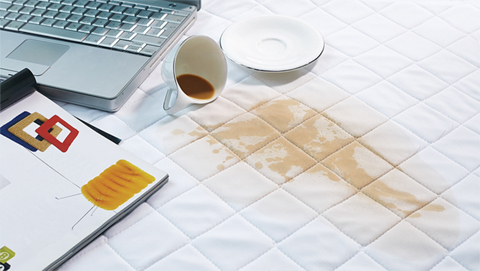
Urine stains on the mattress:
Urine stains are very difficult, but not impossible to remove once dry, but this method has been instrumental in saving several mattresses in my house.
First, dissolve 3 tablespoons of baking soda in 25 cl of hydrogen peroxide then add one or two drops of liquid dish soap. Dab this solution onto the urine stains. If the stain persists, wait until the mattress is dry then mix together 3 tablespoons of powdered detergent (that does not contain oxygen bleach) and 1 tablespoon of water to make a dry foam. Spread the mixture onto the stain and let it sit for 30 minutes. Scrape off any residue and vacuum thoroughly.
Other bodily fluids (vomit, etc.):
Using a white cloth, blot the stain without water or stain removers, adding scented ammonia if necessary. Clean the area with a clean, damp cloth and sprinkle the stain with baking soda to neutralize the ammonia odor and extract any lingering moisture. Once dry, vacuum the area completely.
Keeping the mattress clean

Suggesting the use of a waterproof mattress protector is misunderstood, because it is associated with nocturnal leaks in children and the elderly. But a waterproof mattress protector mainly serves as a barrier against liquids, including sweat and other things. Imagine how many epithelial cells (food for mites) and humidity we could spare our mattress!
Forget the old plastic sheets for mattresses and the plasticky, rigid, and warm covers from when we were children (and bedwetting was inevitable). Today, waterproof mattress protectors are not made of PVC (i.e., insulating plastic) but of spread foam underneath, breathable for air and impermeable to liquids, and soft cotton on top (only quality mattress protectors have this characteristic; here's one)
Tips, doubts, perplexities? Ask your question or share your experience by filling out the blog form below!


