

Choosing the right pillow
The best pillow and how to find it
If you can't sleep on every pillow, but are quite particular, you're in good company. It's harder to find the right pillow than the right mattress. How do you find the right pillow? Let's start with the material:
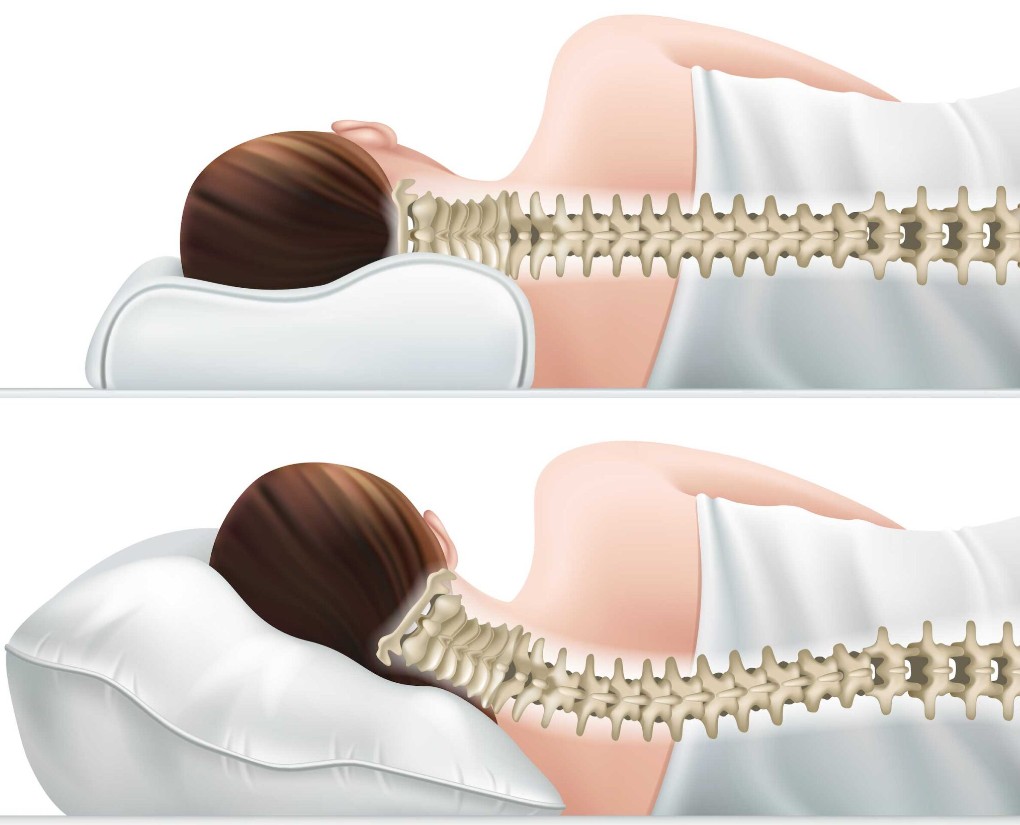
The most suitable memory foam pillow for neck pain
The memory foam pillow adapts to the curves of the neck and head, conforming to support without compressing. A memory foam pillow is undoubtedly a good choice for neck pain if:
- you sleep on your side and back;
- you don't put your arm under the pillow;
- you don't find relief with feather or soft fiber pillows.
Thanks to its non-deformability, the memory foam pillow is recommended for correct cervical posture, in medium heights, such as 12 or 13 cm. It is the most chosen pillow model and therefore available in more proposals and versions of firmness. Among the best in this height are the Simmons Memoplan and Dorelan Sense memory foam pillows.
If you have a particularly firm, non-yielding mattress or your physique requires a higher pillow, I recommend the Gabrielli 15 cm high memory foam pillow.
Is a latex pillow suitable for neck pain?
A latex pillow is excellent for neck pain if:
- you don't like the slow memory effect of memory foam;
- you sleep composed, without hugging the pillow;
- you are looking for soft support.
There are substantial differences between latex and memory foam pillows. The latex pillow is more reactive than memory foam, meaning it adapts as soon as you rest your head, without gradually yielding. You feel a slight elastic push, more noticeable than with memory foam. Generally, latex pillows are softer and lower than memory foam pillows.
If you love this comfort and are not looking for a very high pillow, see the Simmons Planet 13 latex pillows. If you are looking for firmer and higher support, the 16 cm high natural latex pillow is advisable.
To learn more, go to the page on cervical pillows

The test to find the right pillow
Is there a test to check if the pillow, in addition to being of quality, has the right characteristics for you? Here's what to check:
- Hand test: try contact without a cover, with light hand pressure, without overdoing it, because the pressure of the head on the pillow is more distributed than fingers pressing on a localized spot. The pressure test risks being misleading. It's better to use an object to evaluate support from the outside.
- Breathability test: if the store or situation allows it, bring the pillow to your mouth and blow. If you feel a lot of heat on your lips, the pillow is not very breathable.
- Weight test: if two memory foam pillows have different weights, it means they have different densities; the heavier one is less yielding.
How to evaluate pillow height
If you need to change your pillow and want to start with the right height, consider that:
- the density of the pillow and therefore the firmness and more or less decisive support, changes the effect that a high pillow can have.
- the height of your suitable pillow may change if you change your mattress;
- if you need to measure the pillow, do it correctly, with a rigid, flat rod.
More on the right pillow height
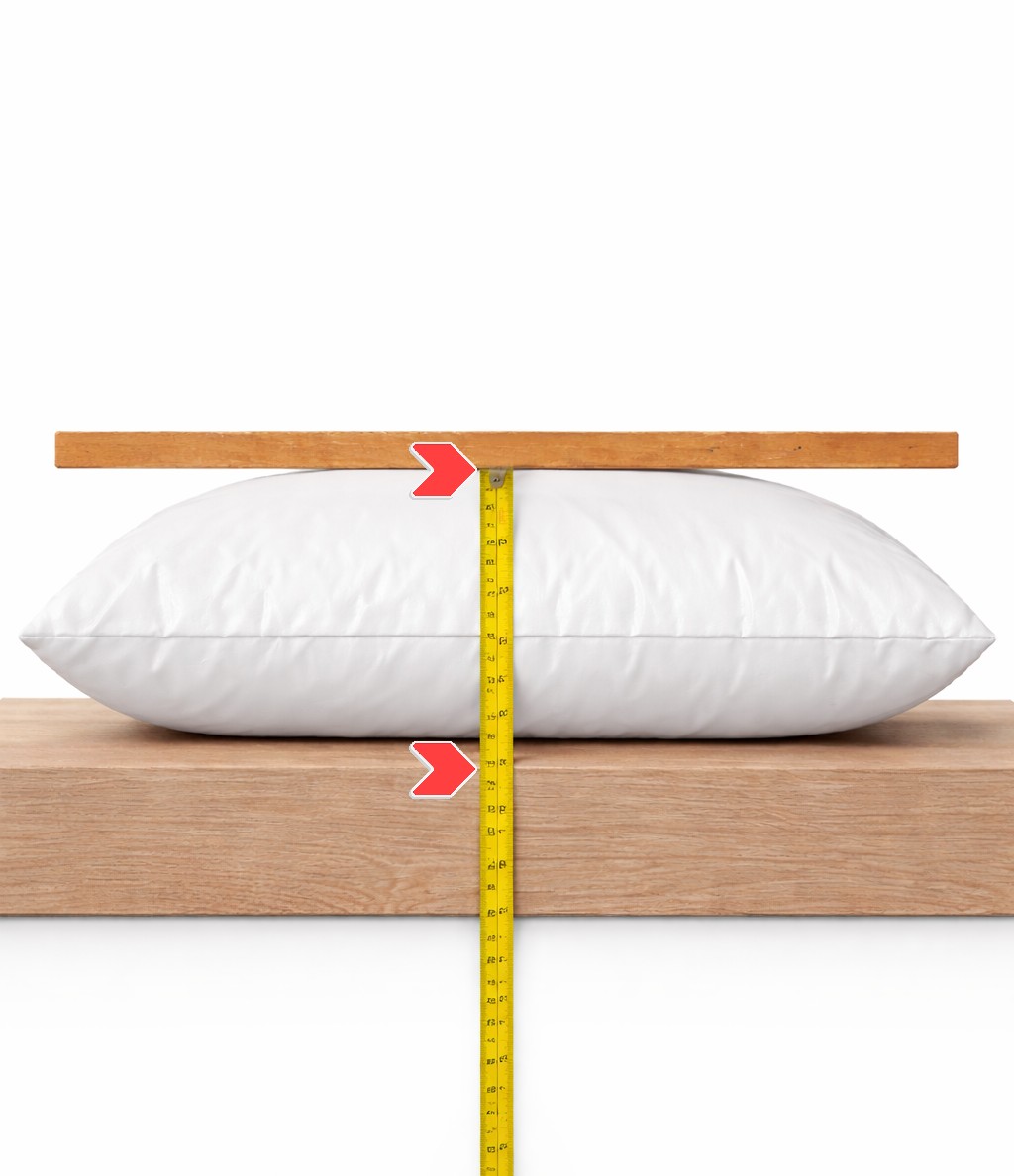
Measuring the height of a pillow is not as simple an operation as it might seem.
Unlike a rigid object, a pillow is a deformable product that changes shape depending on how it is placed, supported, or compressed. For this reason, height should be considered an indicative value, useful for orientation, but not sufficient on its own to describe the real comfort of a pillow. A fundamental aspect is the density and nature of the material. A memory foam pillow, for example, can have significant height but yield a lot under the weight of the head, while a latex pillow, with the same number of centimeters, can be more reactive and supportive. Two pillows declared "13 cm high" can therefore offer completely different sensations during use.
The internal structure and shape also matter a lot. A solid slab pillow behaves differently from a micro-perforated or channeled one: the holes and internal workings increase breathability, but also modify the elastic response and the perception of height once lying down. In summary, height is a parameter that should always be read in relation to other factors: material, density, elasticity, internal structure, and sleeping position. Evaluating a pillow based only on centimeters risks being misleading. Real comfort is measured when the head, neck, and shoulders find the right balance, not when a number is read on a tape measure.